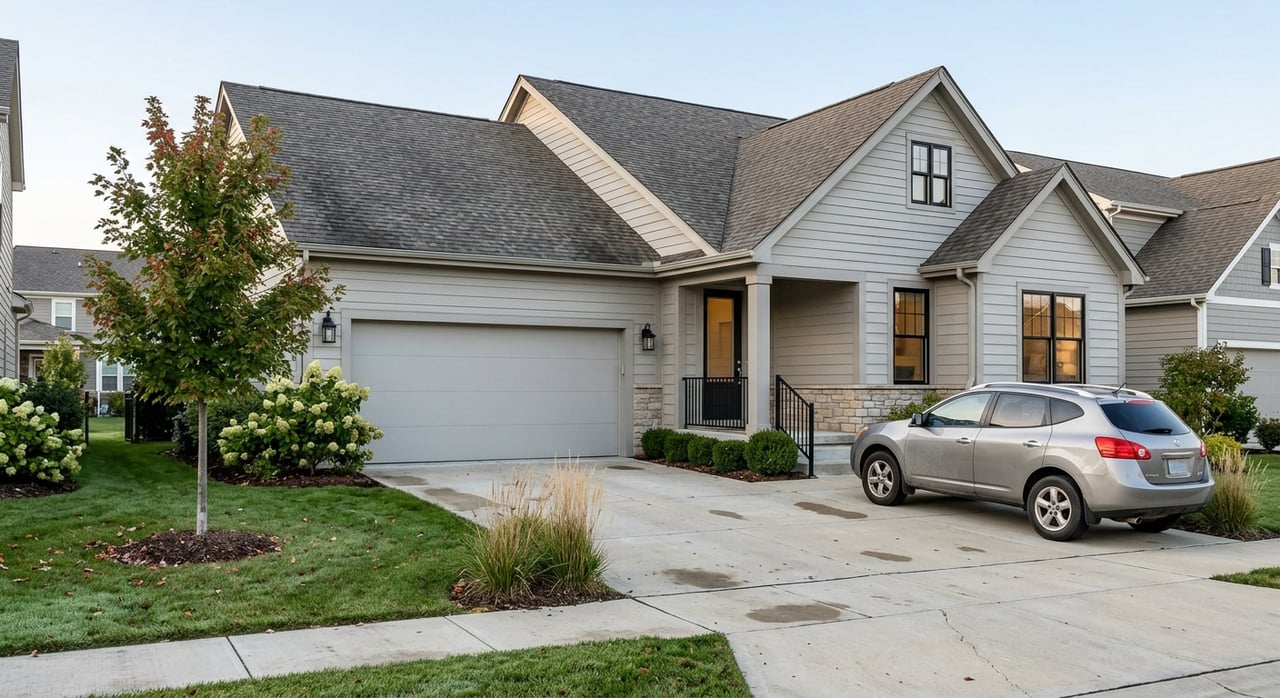
Commuting From Powell To Columbus: Daily Life Overview
June 4, 2026
June 4, 2026
If you work in Columbus but want a little more breathing room at home, Powell often lands on your shortlist fast. The big question is whether the commute feels manageable in real life, not just on a map. The good news is that Powell is firmly within daily commuting range for many Columbus workers, especially if you plan around traffic, route changes, and your weekly schedule. Let’s dive in.
Powell is widely considered a commuter-friendly suburb for people working in Columbus. Official city materials describe downtown Columbus as about a 20-minute drive from Powell, and current route planning puts the trip at roughly 17 miles and about 22 minutes by car.
That lines up closely with Census QuickFacts data showing a mean travel time to work of 24.3 minutes for Powell from 2020 to 2024. In plain terms, that means the commute is realistic for many households, but your actual experience depends heavily on when you leave and which route you take.
One of the most direct paths into Columbus is SR 315 south. From there, many drivers continue toward the city edge using the Kinnear exit, Olentangy River Road, or King Avenue, depending on where they need to go.
If your destination is near downtown, the Short North, or the Ohio State area, this corridor is often part of the conversation. It is straightforward, familiar to many commuters, and usually one of the first routes people test.
Powell Road, also known as SR 750, is the city’s main east-west street. Powell planning documents also identify Sawmill Parkway and SR 315 as major arterials that connect to I-270, which gives you more than one way to approach Columbus.
That flexibility matters because not every commute starts and ends at the same time or in the same part of downtown. Depending on your office location, a route that works well one week may not be the best option the next.
Route 23 is another major north-south thoroughfare in this part of the region. While it may not be every commuter’s first choice, it becomes especially useful when construction or traffic slows down your usual route.
For many Powell residents, having a backup plan is part of the routine. That is especially true when road work changes travel patterns with little notice.
A Powell-to-Columbus commute can feel simple on a quiet morning and much different during rush hour. An official Columbus corridor engagement report found that traffic is busiest from 6 to 9 a.m. and 4 to 7 p.m., and Powell’s own planning documents note that rush-hour traffic puts significant strain on corridors leading into Columbus.
Using those patterns as a guide, a practical planning range is about 20 to 25 minutes in off-peak traffic and roughly 30 to 45 minutes during peak periods. That peak-time figure is an estimate, not a fixed published travel time, but it gives you a useful framework for planning your week.
One detail buyers sometimes overlook is that your commute does not end when you reach downtown Columbus. Parking can add time to your morning, especially if you use a garage, hunt for a curb space, or need to walk several blocks to your office.
Columbus parking planning documents note the mix of garages, lots, curb parking, and a dense street grid in the downtown core. So when you think about commute time, it helps to measure your full door-to-desk routine instead of the drive alone.
Road construction is one of the biggest reasons your “normal” commute may not stay normal for long. As of spring 2026, ODOT is closing SR 315 between Home Road and Bunty Station Road for roughly 120 days, with detours using SR 750 and US-23.
That kind of project is a practical reminder that commute planning in Powell works best when you know more than one route. If you are considering a move, it is smart to test your drive at the time you would actually leave, not just once on a weekend.
Before you buy in Powell, try to simulate your real routine as closely as possible. A test drive can tell you more than an online map if you pay attention to the full experience.
Consider checking these details:
For many households, the Powell commute looks easier today than it did a few years ago because fewer people need to make it five days a week. The Bureau of Labor Statistics reported a 22.6 percent telework rate in March 2026, and telework among private wage-and-salary workers was 20.8 percent in April 2025.
If you commute only part of the week, a 20- to 25-minute baseline drive can feel much more manageable. That can make Powell appealing if you want access to Columbus jobs without living in the city full time.
Powell is also adding infrastructure that supports hybrid schedules. The city’s new COhatch campus in downtown Powell opened in 2026 with private offices, coworking space, and meeting rooms.
That gives some residents another option for workdays that do not require a downtown commute. For buyers who split time between home, office, and occasional meetings, that kind of flexibility can make daily life feel easier.
A commute is only one part of your decision. What often makes Powell stand out is the balance between access to Columbus and day-to-day convenience close to home.
According to the city, Powell has 114 acres of parkland and 29 miles of interconnecting trails. Downtown Powell also offers free parking and ongoing walkability improvements, which adds convenience for errands, coffee runs, and local meetups.
That matters because the best commuter suburb is not just a place where you sleep between workdays. It is a place where your time at home feels useful, comfortable, and connected to the kind of routine you want.
Powell can make sense for several types of buyers, especially if your work life is not strictly tied to a daily downtown schedule. It may be worth a closer look if you want:
If you need to be in the office at the same time every morning, your comfort with traffic will matter a lot. If you have even a little flexibility, Powell may feel much easier to live with.
Before deciding whether Powell fits your routine, focus on the practical details that shape everyday life. A home can check every box on paper, but the right choice is the one that works with your real schedule.
Here are a few questions to ask yourself:
These are the kinds of details that help turn a broad home search into a confident decision. When you evaluate Powell through the lens of your actual routine, the picture usually becomes much clearer.
If you are weighing Powell against other Central Ohio suburbs, a local perspective can help you look beyond drive time alone. The right move is not just about mileage. It is about how your home, your schedule, and your day-to-day life fit together. When you are ready to talk through neighborhoods, commute patterns, and what works best for your next move, reach out to Kara Barnhart.
Stay up to date on the latest real estate trends.




A real estate experience built on trust, care, and clear guidance from start to finish. She takes the time to understand your family’s needs, handles every detail with intention, and ensures the process feels smooth and stress-free. With expert staging insight and specialized probate support, Kara is committed to protecting your interests and helping you achieve the best possible outcome.