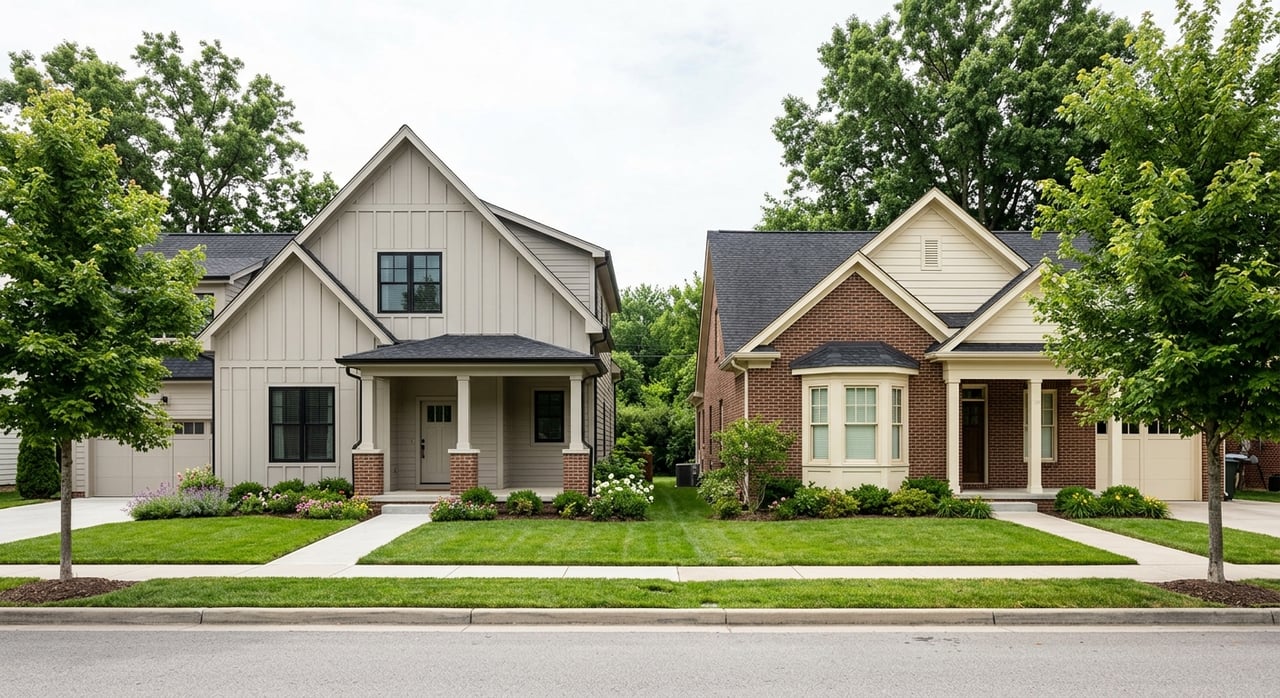
How To Compare Dublin Neighborhoods As A First-Time Homebuyer
May 14, 2026
May 14, 2026
If you are buying your first home in Dublin, it is easy to get overwhelmed by neighborhood names, home styles, and the pressure to pick the "right" area. The good news is that comparing Dublin neighborhoods gets much easier when you stop trying to rank them and start looking at how each one fits your daily life. From walkability and lot size to trails, commute routes, and home-age flexibility, this guide will help you build a smart short list with more confidence. Let’s dive in.
As a first-time homebuyer, you do not need a perfect neighborhood. You need a neighborhood that fits how you actually live day to day. In Dublin, that often means comparing older versus newer areas, walkable versus drive-first settings, and preservation-focused areas versus neighborhoods with more flexibility.
That approach matters because Dublin includes a wide range of environments. The city stretches from Historic Dublin’s early-19th-century core to post-1970s communities like Muirfield Village and newer mixed-use development in the Bridge Street District. Instead of asking which neighborhood is best, ask which one feels most practical for your routine.
Historic Dublin is the city’s founding core. The area includes early 19th-century architecture, dry-laid limestone fences, and original buildings that reflect the community’s heritage.
It is also more varied than many buyers expect. The district includes the Historic Core, Historic South, and Historic Residential areas, with a mix of historic buildings, cottage-scale spaces, residential homes, and some newer contemporary buildings.
Muirfield Village took shape in the 1970s and offers a different feel from downtown-style living. City planning materials describe it as a collection of low- to medium-density neighborhoods with single-family homes on larger lots and generous open space.
A major feature here is recreation access. Muirfield Village also includes its own private bikeway network, which gives buyers another way to think about daily movement beyond just driving.
Ballantrae is a planned low-density residential district. According to a 2024 planning report, detached single-family lots typically range from 0.3 to 0.75 acres, with some smaller condominium and small-lot development in part of the area.
The Golf Club of Dublin sits at the heart of the Ballantrae residential community. For buyers who picture a more spread-out suburban setting, Ballantrae is a useful contrast to Dublin’s more compact mixed-use areas.
Bridge Street District is Dublin’s mixed-use, walkable neighborhood. The city describes it as a place where residential options sit alongside restaurants, retailers, entertainment venues, office uses, and public space.
It also has strong regional access. The district connects through the Dublin/US 33 I-270 interchange, OH-161, and Riverside Drive, which can matter if you want both convenience and connectivity.
Dublin’s newer planned neighborhoods and planned unit developments can appeal to first-time buyers who want a newer-build feel. The city’s zoning guidance emphasizes purposeful open space, links to other activity areas, pedestrian-oriented streetscapes, and durable materials.
That does not mean every neighborhood looks the same. It means newer areas are often designed with a more intentional layout, especially around sidewalks, open space, and neighborhood flow.
One of the fastest ways to narrow your list is to decide how much home-age variety you want. Historic Dublin offers architecture that spans more than two centuries, including vernacular stone houses, Federal-style homes, Italianate buildings, Greek Revival forms, bungalows, and post-World War II ranch homes.
That variety can be exciting if you want character. It can also mean more differences from one block to the next, which is important if you prefer a more uniform streetscape.
By contrast, newer planned neighborhoods usually feel more consistent. If you are looking for a more predictable layout, newer finishes, and a neighborhood design centered around open space and pedestrian connections, those areas may feel easier to evaluate.
This is one of the most important comparisons for a first-time buyer. In Historic Dublin, exterior changes in the Historic District can require Architectural Review Board approval.
That preservation focus helps protect the area’s historic character, but it can also affect how freely you can change the exterior of a home. If you love older homes but want fewer design restrictions, this should be part of your comparison process early on.
Newer neighborhoods are generally guided more by planning standards tied to lot proportions, open space, and pedestrian-oriented design. That creates a different kind of structure than a preservation-based review process.
In Dublin, parks and paths are not just nice extras. They are a core part of how the city works.
The city says Dublin offers more than 1,136 acres of developed parkland, 178 acres of undeveloped parkland, 64 developed parks, and more than 154 miles of bikepath. City planning materials also describe more than 110 miles of public bikeways, plus 22 miles of private bikeway in Muirfield Village.
That means trail access should sit on the same level as square footage or kitchen updates when you compare neighborhoods. If walking, biking, or easy access to open space matters to you, it can shape your daily experience just as much as the house itself.
Different neighborhoods offer different recreation anchors. Ballantrae centers around the Golf Club of Dublin, while Muirfield Village includes the Golf Club at Muirfield Village, The Country Club at Muirfield, additional pools, bike trails, and other recreation facilities.
Across Dublin, the broader path system connects residents to recreation, local destinations, and workplaces. So when you tour homes, it helps to look beyond the lot line and ask how the neighborhood connects you to the rest of the city.
A short drive on a map does not always feel short during peak travel times. Dublin’s major corridors include I-270, US 33/SR 161, Dublin Road, Riverside Drive, Sawmill Road, Avery Road, and the Avery-Muirfield Drive corridor.
City traffic analysis identifies peak-hour congestion on I-270 and US 33/SR 161, along with the Avery-Muirfield Drive corridor, Sawmill Road, Frantz Road, and Riverside Drive. For a first-time buyer, that means commute convenience is about more than distance alone.
Think about which roads you would use most often. Two neighborhoods may look equally close to work or errands, but the corridor you depend on can make one feel much easier to live in.
Convenience looks different across Dublin. The city’s future land use plan says neighborhood centers are intended to provide daily retail and personal services close to home, while village centers are meant to offer daily retail, major grocers, and other conveniences within a 3- to 5-mile radius.
Downtown-style convenience is especially visible in Historic Dublin and the Bridge Street District. Downtown Dublin’s DORA includes Historic Dublin and Bridge Park, and the city describes the area around restaurants, retail, outdoor dining, and entertainment.
If you want to walk to dinner or have more activity close by, those neighborhoods may belong on your list. If you prefer a quieter, more drive-first suburban pattern with larger lots and more open space, areas like Muirfield Village or Ballantrae may feel like a better fit.
If you are stuck between several Dublin neighborhoods, use a comparison method that focuses on your routine. Try rating each area on the factors that will affect your week the most.
Here are a few practical categories to use:
This kind of side-by-side comparison usually gives you more clarity than looking at listing photos alone. It also helps you avoid falling in love with a house before you are sure the neighborhood supports your lifestyle.
Many first-time buyers focus heavily on price, finishes, and bedroom count. Those things matter, but the neighborhood often has the bigger impact on how your purchase feels after move-in.
In Dublin, the strongest comparison is usually not neighborhood versus neighborhood in a competitive sense. It is character versus convenience, open space versus compact living, older homes versus newer planning, and preservation rules versus more flexibility.
When you compare neighborhoods through that lens, your choice usually becomes much clearer. You are not trying to find the one "best" area in Dublin. You are trying to find the one that fits you best.
If you want help narrowing down Dublin neighborhoods as a first-time buyer, Kara Barnhart offers thoughtful, high-touch guidance to help you compare options, reduce stress, and move forward with confidence.
Stay up to date on the latest real estate trends.


A real estate experience built on trust, care, and clear guidance from start to finish. She takes the time to understand your family’s needs, handles every detail with intention, and ensures the process feels smooth and stress-free. With expert staging insight and specialized probate support, Kara is committed to protecting your interests and helping you achieve the best possible outcome.